IPA

IPA has the Knowledge & Experience to Support Your Industrial, Nutraceutical, & Pharmaceutical Needs

About IPA

This author has not yet filled in any details.
So far IPA has created 20 blog entries.

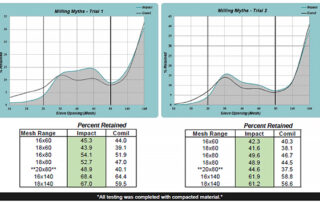
Impact Milling Vs. Comil

PRINT THIS POST Common Misconceptions An Impact mill creates more fines than the Comil. TRUTH: Impacting the particle reduced overall fines, as compared to the Comil “crushing” method. An Impact mill creates a wider particle size distribution compared to a Comil. TRUTH: An impact mill hits each particle with the same impact force, creating a
By |2024-06-14T11:40:24+00:00September 20th, 2023|Size Reduction|

IPA’s Quality Aftermarket Support & Spare Parts

PRINT THIS POST When it comes to roller compactors and size reduction equipment, ensuring optimal performance and efficiency is crucial for businesses. However, as time goes by, even the most robust machinery may require replacement parts to maintain its functionality. That's where IPA's Aftermarket Support and Spare Parts come into play. IPA is proud

By |2024-06-14T11:45:22+00:00June 5th, 2023|Aftermarket Support|

A Smooth Transition: Contract Manufacturing to IPA Roller Compaction Sales

PRINT THIS POST Roller compaction equipment plays a vital role in transforming powdered materials into compacted sheets, offering enhanced efficiency and productivity when processing for further use. The IPA Roller Compactor is designed and manufactured in-house with equivalents to the Fitzpatrick Chilsonator. IPA can provide full- scale services with initial R&D testing, small or large

By |2024-06-14T11:41:42+00:00June 1st, 2023|Contract Manufacturing|

Roller Compactors for Dry Granulation

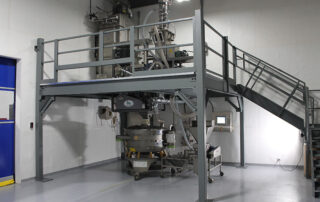
PRINT THIS POST Roller compaction is commonly used for dry granulation in the industrial, pharmaceutical, & nutraceutical industries. It involves a combination of compression and milling to create granules of uniform size and shape. Roller compaction is a highly efficient, cost-effective process; making it an ideal choice for many applications. Dry granulation equipment specifically

By |2024-06-14T11:38:29+00:00May 17th, 2023|Roller Compaction|

The ABCs of Vacuum Deaeration

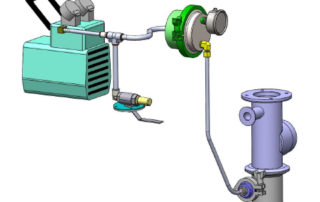
PRINT THIS POST A main function of roll compaction includes the removal of air between material particles to form a hard sheet of compact. When compacting with a twin feed screw design, the majority of materials can be processed efficiently. However, there are still some materials that cannot achieve efficient air removal with the

By |2024-06-14T11:38:47+00:00September 26th, 2022|Roller Compaction|

When to Consider Overs Regrind Loop

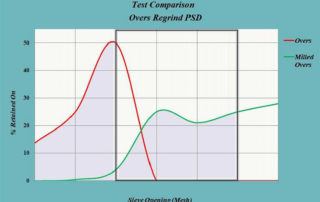
PRINT THIS POST A typical roll compaction system is configured with an initial feeding device, roll compactor, mill, screener, and conveyor. Material enters the compactor (via twin feed screw design), is formed into compact, milled, and screened to separate recycle from the final product. The fines & overs are blended with fresh feed and recycled

By |2024-06-14T11:38:14+00:00June 30th, 2021|Roller Compaction|

Compactor Roll Refurbishment

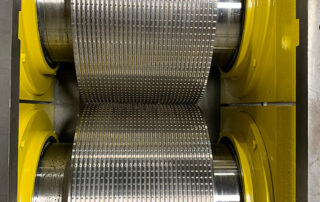
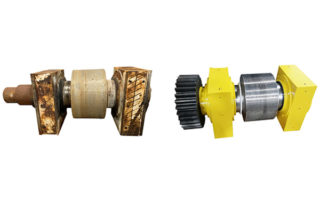
Print this Post The heart of any roll compaction process is the roll surface. It is common for system efficiency to unknowingly diminish overtime for a number of reasons - employee turn over (both operators & maintenance), changes to the equipment itself, and changes made to the upstream equipment. Gradual production

By |2024-06-14T11:51:23+00:00May 7th, 2020|Rebuilds & Refurbishment, Roller Compaction|

Spare Parts, Maintenance & When to Consider

Print this Post IPA roll compactors and mills are durable machines built for long lasting run time. However, all machines require maintenance and often replacing of parts to continue producing optimum product quality and throughputs. Production rates can unknowingly decline over time from a process issue or deteriorating parts.Whether you are running a compactor

By |2024-06-14T11:45:45+00:00August 6th, 2018|Aftermarket Support|

Contract Manufacturing – When is this beneficial

Print this Post Customers frequently ask the questions “when & how long is contract manufacturing best for my product? Is it cost effective?" There are many individual situations amongst companies with often individual answers, as each has a different/unique concern with their application. Here is a general guideline of initial questions to be considering.

By |2024-06-14T11:41:24+00:00July 10th, 2018|Contract Manufacturing|
Go to Top